
Custom Car Audio Systems in Edison for drivers seeking performance beyond universal upgrade packages
Systems Designed Around How You Listen
A failing factory stereo component might prompt you to consider replacing just the broken part, but hearing loss across frequencies, power limitations at highway speed, and outdated connectivity often indicate that the entire system has reached the end of its useful design life. Hi fi audio builds custom audio systems for Edison vehicles by evaluating how you listen, what genres demand the most from your speakers, and whether you prioritize sound quality for critical listening or maximum output for show competitions. The design process matches components across the signal chain so amplifiers, speakers, and source units work efficiently together without bottlenecks or impedance mismatches that waste power and introduce distortion.
Custom systems begin with signal processing at the head unit, flow through dedicated amplifier channels for each speaker pair, and terminate at drivers selected for their frequency response characteristics and power handling. Unlike universal packages that combine mismatched components, custom designs account for your vehicle's cabin acoustics, available mounting locations, and how much modification you're comfortable making to interior trim and cargo areas.
Arrange a planning session to review your audio priorities and identify which components will deliver the most noticeable performance improvement.
Why Tailored Audio Setups Work for Performance Goals
System design involves measuring available amplifier mounting space under seats or in cargo areas, calculating power requirements based on speaker sensitivity and desired output levels, and routing signal cables separately from power wiring to prevent alternator noise from bleeding into the audio path. Component selection considers whether you want a daily driver system optimized for clarity and tonal balance, a show vehicle with visual impact from illuminated enclosures and chrome hardware, or a competition setup tuned for sound pressure measurements at specific frequencies.
You'll notice staging where vocals and instruments occupy distinct positions across the windshield rather than collapsing to a single point, bass that extends cleanly below 30 Hz without overpowering midrange content, and dynamic headroom that allows sudden transients like snare hits or orchestral crescendos to reproduce at realistic levels without compression. The system maintains tonal balance across the volume range because each amplifier channel operates within its linear output region.
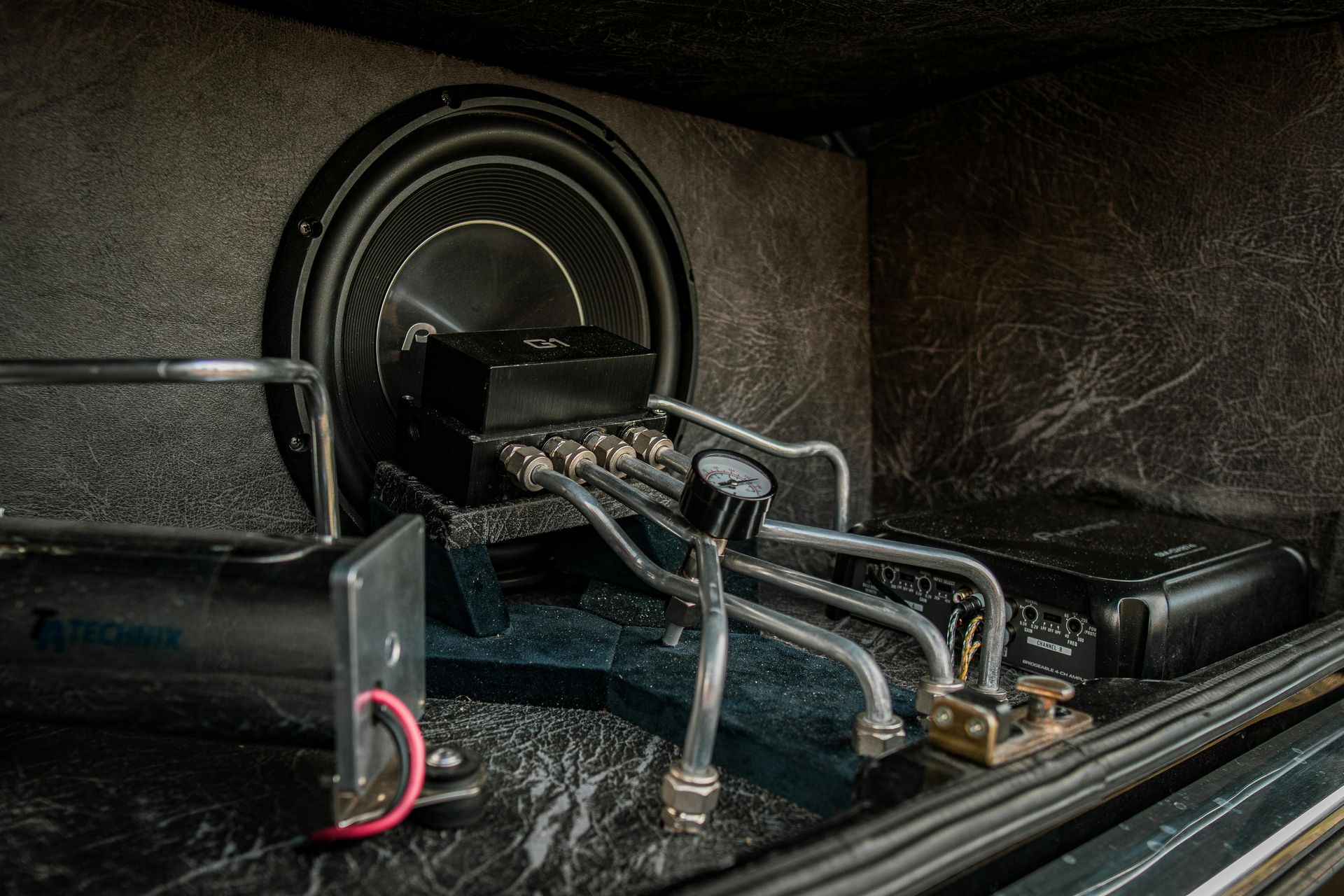
Installations include time alignment to compensate for the unequal distances between speakers and your seating position, active crossovers that divide frequencies with steeper slopes than passive networks allow, and digital signal processing that corrects for cabin resonances without introducing phase distortion. Show systems incorporate fiber optic lighting, custom upholstery around speaker installations, and trunk-mounted displays where amplifiers and enclosures become part of the vehicle's aesthetic rather than hidden components.
Common Questions About This Service
Drivers planning custom installations typically want to understand how component choices affect performance and what the design process involves.
What separates a custom audio system from a universal upgrade kit?
Custom systems match each component to your specific listening goals and vehicle acoustics, using separate amplifier channels for tweeters, midrange drivers, and subwoofers rather than bundling mismatched speakers with undersized amplifiers. The design accounts for impedance loading, crossover points, and time alignment that universal kits ignore.
How do you determine which components to include in my system?
The process starts with understanding what you listen to most and whether you prioritize accurate reproduction of recordings or maximum impact from bass and dynamics. Hi fi audio then selects speakers with frequency response curves suited to those genres, amplifiers with enough clean power to drive those speakers at your desired volume, and source units with pre-amp voltage adequate for the signal chain.
What installation challenges are specific to custom systems in Edison vehicles?
Summer heat in enclosed cabins reaches levels that can trigger thermal protection in amplifiers mounted under seats or in trunk enclosures without adequate ventilation. Custom installations account for airflow around amplifiers and position heat sinks where they benefit from climate control circulation or battery cooling paths.
When does it make sense to build a custom system instead of incrementally upgrading?
If you're replacing multiple components anyway, designing the system as a unified project ensures compatibility and avoids the common mistake of pairing high-output speakers with amplifiers that lack the power to drive them properly. Custom builds also provide cleaner wiring with shorter cable runs and fewer connection points where resistance losses accumulate.
How long does a full custom audio installation typically take?
Systems with four to six amplifier channels, component speakers in front and rear locations, and one or two subwoofer enclosures usually require two to three days for complete installation, wiring, and tuning. Competition builds with extensive fabrication and show-quality finishing take longer depending on enclosure complexity and trim modifications.
Hi fi audio designs custom systems around the acoustic signature you want to achieve, whether that means transparent reproduction for jazz and classical recordings or high-impact dynamics for electronic and hip-hop genres. Schedule a consultation to define your performance goals and review component options that fit your budget and vehicle configuration.